It is fair to say that technology is here and it’s here to stay. But how has it already affected us and our jobs? Furthermore, how likely is it to affect job roles in the future? This post highlights how our job roles have changed whilst also looking at what could happen in the future.
Many years ago, farmers would have small farms, with cow herds far smaller than todays numbers; averaging 10 cows per farm. These farmers would work the land with horses and if they were of affluent backgrounds they would have tractors. Over time dairy farmers started getting bigger and bigger, because of the fast pace technological advances (BC Dairy 2020).
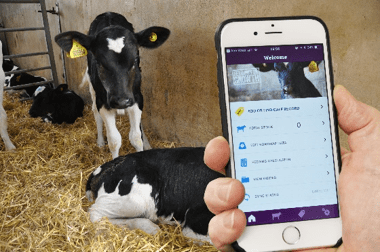
(Farmers-mart.co.uk 2018)
Farmers now have the ability to look at the microscopic details and understand cows even more than ever before; through headcollars which measure walking distances, heat signals, best time to impregnate a cow and milk yields to name a few technological advances (BC Dairy 2020). The farmer has been able to use this technology and change the way they run their operation to be more efficient and profitable. This has been enabled through 5G connectivity like this farmer has: https://www.bbc.co.uk/news/av/business-46434250/how-5g-connectivity-could-keep-these-hi-tech-cows-healthy
This has meant farmers have had to learn new skills by understanding the different data that is being shown to them. This has meant the traditional skills farmers would have learnt are somewhat made redundant because of the technology but they are still needed in different areas, this consequently has led to a demand in more agricultural courses (Newsroom, 2016).
Technology has still not removed the very physical side of the job; henceforth the demographic trends of the agricultural industry still remain relatively the same as before. Tractors and machines have enabled the farmer to work longer into their lives as there is less pressure on the body because technology does some of the heavy lifting for them. Furthermore, farming is often a 24hr job, thus younger people are generally fitter and able to deal with these hours better than older demographics, hence there has been little change in this demographic over latter years.
However, what does the future of the dairy farmer look like? Many see it following the same sort of trend as other industries; it is slowly becoming automated. The future could be where all dairy farms are robotic. The food for the animals is made out in the fields where autonomous machines harvest and bring the crops in. A robot then makes the best mix of feed through analysing the crops, which a robot then delivers to the feed barriers. When a cow is seen to be ill, a robot calls either a vet to come and look at the animal or could it come to the stage where robots now analyse and treat the cows themselves. Something like this perhaps?
(Lely 2018)
One thing that cannot be seen to change in the future is the reliance on the gig economy. Many farmers employ people in on short term contracts to do specific and specialist jobs: “Agriculture, forestry, fishing, mining, energy & water used to have the second highest proportion of the workforce in self-employment in June 1997, but this had declined almost 8 percentage points by 2017” (Odgers Connect, 2017 pg 9). This will remain the same for many years because many farmers do not own the machines to do the job unless the price of technology and machines drastically falls as currently it is not profitable owning these machines. However, the level of short-term jobs could be decreased with automated machines coming in; replacing the worker; shown from the above report. This is because farming is one of the most dangerous jobs in the world thus the push for more automated machines is very present (Tran and Sokas, 2017).
A factor that is preventing more technology from being implemented and changing the way farms are run is the current demographics who are running the farms do not like technology and are not susceptible to change. This is because they do not think the technology adds value or is useful and does not solve issues, as the way that they have done it has worked so why change something; highlighted by TAM’s model.
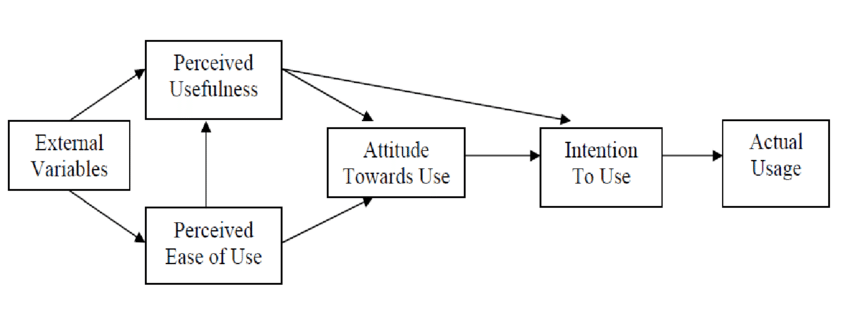
TAM’s model highlighting how people become acceptant to technology
(Lai 2017)
We can see how technology has helped farmers become more profitable and changed the way that they do their jobs and how at times they have had to relearn skills. However, it is quite clear that the changes in the future are a long way off because of the increase in cost to implement technology and the fact the older generation who run the farms are susceptible to change.
References
BC Dairy. (2020). Technology in the dairy industry. [online] Available at: https://bcdairy.ca/milk/articles/technology-in-the-dairy-industry [Accessed 11 Feb. 2020].
Farmers-mart.co.uk. (2018). NEW CALF GROWTH APP AND WEBSITE FROM VOLAC | The Farmers Mart. [online] Available at: http://www.farmers-mart.co.uk/2018/08/21/new-calf-growth-app-and-website-from-volac/ [Accessed 11 Feb. 2020].
Lai, P. (2017). THE LITERATURE REVIEW OF TECHNOLOGY ADOPTION MODELS AND THEORIES FOR THE NOVELTY TECHNOLOGY. Journal of Information Systems and Technology Management, 14(1).
Lely (2018). Lely Astronaut A5 – The art of milking (English). Available at: https://www.youtube.com/watch?v=5cWiEp10ruA [Accessed 11 Feb. 2020].
Newsroom. (2016). Demand on the rise for agriculture courses. [online] Available at: https://about.unimelb.edu.au/newsroom/news/2016/january/demand-on-the-rise-for-agriculture-courses [Accessed 11 Feb. 2020].
Odgers Connect (2017). The Professional Gig Economy in the UK. London: Odgers Connect, p.9.
Tran, M. and Sokas, R. (2017). The Gig Economy and Contingent Work. Journal of Occupational and Environmental Medicine, 59(4), pp.e63-e66.


An interesting post about the appliance of technological innovation and tracking into the agricultural space, one many would likely overlook in a day to day setting. It’s curious to read about how tech is making its way into agriculture, but clearly, as you discuss, the cost to entry is too high for most smaller-scale farmers to embrace. Perhaps, as you state, widespread long term adoption will help revolutionise animal raising and make it most cost-effective and environmentally friendly; especially with the idea of new generations being more likely to embrace such changes.
LikeLike
Hi Henry,
Great post, I thoroughly enjoyed it. I wonder how you feel about the potential mass milk shortage on the horizon (Cate, 2018)? I read that one attempt to address this is by utilising AI, with the Irish firm Cainthus using ‘facial recognition for cows’ to intelligently analyse their behaviour 24/7. Interestingly, by identifying many small inefficiencies in the process, and implementing seemingly minuscule changes, there was a significant yield increase (Marvin, 2019). I would imagine if combined with the Lely technology you’ve written about the results would be extraordinary!
Another, albeit futuristic, technology that could address the demand and pressure on farmers, would be lab-made dairy. Scientists are already working on producing a biologically identical substitute for milk, which not only reduces the milk shortage, but minimises pollution, and (I hate to say it!) eliminates potential animal cruelty (Sheikh, 2019). I wonder whether this would remove the pressure on farmers, or end up being a threat?
Cate, A. (2018, May 21). Dairy Farming Into the Future: A 50-year Projection. Dairyherd. https://www.dairyherd.com/article/dairy-farming-future-50-year-projection
Marvin, D. (2019, August 17). Artificial Intelligence In The Dairy Barn. Forbes. https://www.forbes.com/sites/donaldmarvin/2019/04/17/artificial-intelligence-in-the-dairy-barn/
Sheikh, K. (2019, August 2). Got Impossible Milk? The Quest for Lab-Made Dairy. The New York Times. https://www.nytimes.com/2019/08/02/science/lab-grown-milk.html
LikeLike
When thinking about the future of farming, and your prognosis that future technological advances would be slow due to costs and resistance to technological change, I thought that like many professions in the future, the farmer’s job may under threat. The rationale being the importance of the climate and global attempts to reduce greenhouse gases, in combination with the increased popularity of plant based meat substitutes and the advances made in lab grown meat (https://www.wired.com/story/lab-grown-meat/). Do you think that traditional farms will be able to compete in the future with the rise of technologically manufactured meat (and its plant based substitutes) by large multinational companies?
LikeLike